Starting at 2230 € / Person
You'll discover the best birding and lemur spots in Madagascar on this short tour. You'll get to see a variety of birds and lemurs, national parks with special creatures, stunning scenery, diverse cultures, and a fascinating past on this trip. Madagascar's bird fauna is rich, with almost 300 bird species. More than half of Madagascar's breeding birds are endemic to the island. A 4x4 vehicle and your own personal driver guide will allow you to explore Madagascar at your own pace.
HIGHLIGHTS :
Isalo National Park : Made up of huge canyons and gorges, imposing rock towers and Jurassic highlands. Isalo National Park is one of the most fascinating and beautiful places to visit on holidays to Madagascar. Among the untamed scenery, you’ll see incredible wildlife such as ring-tailed lemurs, the Malagasy rainbow frog and the native, white-lipped bright-eyed frog.
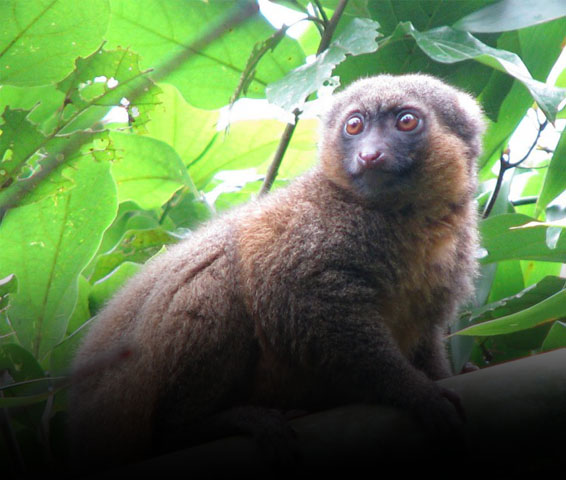
Ranomafana National Park: Home to natural hot springs, waterfalls and tropical rainforest, Ranomafana is a magnificent park which is listed as a UNESCO World Heritage Site. It spans for 161 square miles and plays host to a wealth of endemic animal and plant species, with 12 species of lemur alone, including the famous golden bamboo lemur. Also, keep your eyes peeled for bats, tenrecs and mongoose.
Tsimanampetsotsa National Park : is one of the most fascinating and biodiverse nature reserves in Madagascar. It is made up of a large Salt Lake, limestone plateau, sinkholes and caves. The lake is an abundant habitat for wildlife, where one can encounter 72 distinct bird species, including flamingos, the Madagascar plover, and the endangered Grandidier's mongoose. Around other parts of the park you’ll find lemurs, turtles, reptiles and maki catta.
The National Park of Ankarafantsika : is one of the largest and last remaining areas of dense, dry, deciduous forests in Madagascar. It is the last refuge for a number of endangered and endemic species of lemur and bird, making conservation here essential.
DAY 1: ANTANANARIVO
‘’Manao ahoana’’ & ‘’Salama’’ Welcome to tropical paradise. Meet and greet by your guide or representative on arrival at Antananarivo Ivato International Airport. You will be transferred to your hotel in Antananarivo. The travel time will be approximately 45 minutes to 1 hour depending on the road traffic. Overnight at the hotel
DAY 2: ANTANANARIVO- ANTSIRABE
The journey to Antsirabe begins after breakfast. The journey duration is estimated at 4 hours.
Antsirabe is the third-largest city in Madagascar, located in the high altitude (about 1, 500 metres) The Norwegian Missionaries chose this city because of the cool temperatures in the high altitude. Antsirabe is the home of one of the award-winning best beers in Madagascar, Three Horses Beer. The city's name means "where there is salt" because of the large number of hot springs the town has, a fact that has given the city the nickname of "Malagasy Vichy." The locals had long appreciated the curative effects of the hot springs when French settlers decided to build one here in the 19th century. Overnight at the hotel
DAY 3: ANTSIRABE- RANOMAFANA
Transfer to the Ranomafana national park.
Ranomafana is a mid-altitude rainforest that covers over 41,601 hectares. Ranomafana provides skilled nature guides and is great help in finding elusive bird species. Ranomafana National Parks success is due to one-woman vision and dedication to preserve the nature and wildlife. The world's foremost authority on lemurs is Patricia Wright, best known for her 26-year study of social and familial interactions of wild lemurs in Ranomafana National Park, Madagascar.
Ground-rollers, such as the Pitta-Like Ground-Roller, are common at Ranomafana.
You'll go for a walk at night with a guide to see the nocturnal lemurs.
Only active during night time. Overnight at the hotel
DAY 4: RANOMAFANA NATIONAL PARK
You will explore this wonderful rainforest after breakfast. In many ways, Ranomafana is a conservation success story. The Centre ValBio Research Centre is one of the most sophisticated research field stations in Madagascar and plays a crucial role in education and scientific research.
The forest types range from rainforests to cloud forests and plateau forests. In 2007, it was designated as a World Heritage Site. It has a lot of endemic biodiversity with challenges. Madagascar snipe, Slender-billed Flufftail and Grey Emutail can be found in the forest marshes. Rare species and seriously threatened lemurs can be seen. Some rare and endemic plant species can be found in the park's genetic archives. Many rivers and streams pass through the forest. Several animal species have been identified, including golden bamboo lemur, greater bamboo lemur, Milne-Edward's shifaka, red bellied lemur, and 115 species of birds. There are about thirty of them in the primary forest of the park. There are also 90 species of butterflies, 98 species of amphibians, and 62 species of reptiles. Your park guide will explain to you the circuits that are available to you before. The Circuit Varibolomena trek takes about 2-3 hours. This soft circuit is about 3 kilometers long, but there are also harder circuits. Overnight at the hotel.
DAY 5: RANOMAFANA NATIONAL PARK – ANJAH – RANOHIRA
After breakfast, you will travel to Anja in the south. The South of Madagascar is known for its spiny forests and colorful tribes. Isalo National Park is one of Madagascar's most popular parks. Anja Park is a place where you can see ring-tailed lemurs in troops. It is the most visited community-run protected area for the lemurs and the landscape is amazing with granite rocks in the background.
You will walk around the 30-hectare reserve for 2 hours. You can see some tombs from Bestsileo here too.
After that, you'll keep going towards Isalo. Overnight at the hotel.
DAY 5: RANOHIRA -ISALO NATIONAL PARK
Today you will explore Isalo National Park with a park guide. This is the Grand Canyon in Madagascar. The Kingdom of the Queen of Isalo is a place with a wild nature and a beautiful landscape. People who like big escapes will be attracted to this park. People like the Jurassic Era's beautiful landscape with eroded sandstone, canyons, rare plants, and animals.
The trekking circuits have natural swimming pools and canyons. The Isalo trekking route is easy and takes about 3 km in 3-4 hours. There are many ways to exercise, and you can ask the guide which one works best for you and how fit you are. Most hiking trails have a natural pool. The natural swimming pool is a great place to relax and unwind.
There are around 80 species of birds in Isalo, of which the Benson’s rock-thrush, an endemic species of Madagascar, is well protected. There are also 14 species of nocturnal lemurs, including ring-tailed, Verreaux’s Shifakas and red-fronted brown lemurs.
In the afternoon, you can go to the Window of Isalo to see the sunset. It'll be amazing! Overnight at the hotel
DAY 6: RANOHIRA -ISALO NATIONAL PARK
Today, you will spend another day at Isalo National Park, which hosts approximately 80 species of birds (including the rare Benson's rock-thrush, the knob-billed duck or the crested ibis), 35 reptiles, and several endemic frogs. There exist several indigenous endemic plants among the 500 flora species present within Isalo, including the elephant's foot, as well as some uncommon palms and aloe species. One can also enjoy lunch in close proximity to the areas where the ring-tailed lemurs frequently engage in play.
DAY 7: RANOHIRA -ZOMBITSE NATIONAL PARK – ARBORETUM - IFATY
You'll leave for Ifaty after breakfast, stopping at the Zombitse National Park on the way. Travel time will be approximately 4 12 hours.
Zombitse Vohibasia is located in the southwest of Madagascar. Zombitse Vohibasia is renowned for its richness in rare bird species and its unique biodiversity. This area is now a protected area.
There are 47% of the endemic birds of Madagascar in Zombitse Vohibasia. It also includes 8 species of lemur, of which some are almost threatened, such as the western fork-marked lemur (Phaner furcifer pallescens)
The soft circuit trek in Zombitse takes about 1-2 hours depending on your interests. After park visit continue your journey to Tulear.
Overnight at the hotel on the seaside
DAY 7: IFATY
You will travel approximately 10 minutes to visit the Reniala Reserve, also known as Domergue reserve, after an early breakfast. Over 60 hectares of outstanding forest are home to baobabs and thorny trees. There are species of Madagascar's Spiny forest in the reserve today. The forest contains amazing flora and fauna. It contains more than 1000 botanical species, many of which have adapted to a dry climate, and have a remarkable floral quality. It has a diverse endemic fauna with numerous bird species. Reniala Reserve is a paradise for birders, who can easily observe some rare endemic species, such as the long-tailed ground roller, the subdesert mesite, the red-capped coua or the blue vanga. Within the reserve, there are 65 bird species. Passionate ornithologists will surely enjoy visiting this park! Alongside birds, you will also find tortoises, reptiles, snakes and microcubes, that will delight all fauna enthusiasts. You can relax and enjoy the beach for the rest of the day.
Overnight at the hotel
DAY 8: IFATY-ANAKAO
After the breakfast, you will take a speed boat to Anakao. The trip takes about 45 minutes to 1 hour.
DAY 9: ANAKAO- TSIMANAMPETSOTSA
After the breakfast, you will travel to Tsimanampetsotsa National Park. The travel time from the hotel will be approximately 1 hour long. Tsimanampetsotsa National Park is a site of great biological and scenic importance. It is considered to be one of the ten most important reserves in Madagascar. Unique in kind, with a lake of alkaline origin, an irresistible attraction not only because of its pink and dwarf flamingos but also for its many other winged species. It was made a park in 1927, long before the start of the London International Convention for the protection of African fauna and flora.
Tsimanampetsotsa is located in the southwest of Madagascar and covers over 43,200 hectares with more than 90% of the biological species endemic to the park.
Overnight at the hotel
DAY 10: ANAKAO- NOSY VE
In the morning, you will embark on a boat excursion to Nosy Ve Island that will last approximately 45 minutes. Nosy Ve is an uninhabited island that is known for its snorkeling and bird watching. The area was a French camp in the 19th century where people could trade with Saint Augustin's Bay while avoiding contact with pirates and hostile tribes. It is a journey through history that will allow you to discover some remains of the 19th century. Nosy Ve is also known for its magnificent coral reef, which is home to colourful and abundant fauna. One will have the opportunity to observe ballistas, syngnathus, sea eels, clown fishes, scorpion fishes, tortoises, and even stingrays. The red tail phaeton is an endemic bird species of the island and truly make the place authentic and peculiar. Tourists from all over the world come to Nosy Ve to take a picture of this endemic species. Overnight at the hotel
DAY 11: ANAKAO- TULEAR-ANTANANARIVO
In the morning, you will go to Tulear International Airport. The journey takes about 45 minutes to 1 hour. You will have to fly to Antananarivo. It will take one hour to get there. You will be picked up from the airport and taken to the hotel. It will take around 10 minutes to get to your hotel, depending on traffic.
Overnight at the hotel
DAY 12: ANTANANARIVO – MAHAJANGA
In the morning, you will embark on your journey to Antananarivo Airport. You will travel to Mahajanga. Flight time is 50 minutes. You will be collected from the airport and transferred to your hotel. It will take approximately 20 minutes to reach your hotel, depending on traffic.
Mahajanga or Majunga is a port city of the Boeny region in the North West of Madagascar, located in the Boeny region. You should stop in front of the huge baobab tree, which is one of the largest on the island. Due to its substantial Comoran and Indian populations and historical connections with Africa, it is regarded as one of the most vibrant and ethnically diverse regions in Madagascar. It is also the gateway to one of western Madagascar's most diverse regions, from breathtaking caves and rock formations to sacred lakes and bird-rich wetlands.
Overnight at the hotel
DAY 13: MAHAJANGA- ANKARAFANTSIKA NATIONAL PARK
You will travel from Mahajanga to Ankarafantsika National Park in the morning. The travel time will be between 2-3 hours. The park is located just 114 kilometers south of Mahajanga along the national road RN4. The park office is situated within the village of Ampijoroa. You will be able to take a late afternoon guided walk around the park.
Ankarafantsika National Park is a protected area of the western Malagasy deciduous dry forest, as well as the humid forest and the crocodile-filled Ravelobe Lake. Ankarafantsika is a Turkish word derived from the word Garafantsy, which means "hills of spines".The dry season spans from May until October. It can get very hot during the day, especially in open savannah grassland, which should be visited in the early morning hours in order to beat the heat. Ankarafantsika is an ideal location for birdwatchers due to its abundance of 129 bird species, of which 75 are endemic to Madagascar. Birds are easy to spot and photograph in the deciduous forest, especially in the deciduous forests. Here, you will find the Van Dam's Vanga, the Sickled-billed Vanga, and the Crested Drongo.
Here, there are eight species of lemurs, including the common brown lemur and the cute and cuddly Coquerel's Sifaka, which come out of the forest and can be easily viewed at the park's entrance. The endangered golden-brown mouse lemur (Microcebus Ravelobenis), also known as the Lac Ravelobe mouse lemur, is commonly observed in this region.
Overnight at the hotel
DAY 14: ANKARAFANTSIKA
Enjoy another day of birdwatching and lemur spotting in Ankarafantsika National Park.
The park is regarded as one of the finest birdwatching destinations in Madagascar, boasting a total of 129 species, of which 75 are endemic, including the banded kestrel, Rufous vanga, and Madagascar fish eagle.
Lac Ravelobe is an incredible place for bird watching to see waterbirds, such as fish eagles, heron or ibises. The lake is rich in both wildlife and history.
Besides birds, the largest carnivorous mammal, the Fossa, is also found here. One-half of its diet is comprised of lemurs. Fossa also feeds on tenrecs, other small mammals, lizards, and birds.
The park also hosts a tortoise breeding program for several rare and endemic species, including the ploughshare, which is endemic to the Bay of Baly. Back to Mahajanga after the visit. Overnight at the hotel
DAY 15: MAHAJANGA- ANTANANARIVO
After breakfast, you'll go to the airport and fly to Antananarivo. Your flight time will be about 50 minutes. After you get to your hotel in Antananarivo, you'll have the rest of the day to relax.
In the evening, enjoy a beautiful sunset with drinks and dinner at Lokanga. This is a great place to celebrate a trip around Madagascar with a glass of wine, delicious food, a beautiful view of Antananarivo, and remember the great times you had.
What is included
What is not included
Upon your arrival in Antananarivo on the first day of the "TREK IN MADAGASCAR", you will be greeted at the airport and taken on a tour.
If you arrive before the first day, you can arrange for a hotel room for the tour. You will be picked up from your hotel on the morning of the first day. The time will be decided upon your arrival.
The transport will depend on the group size for the "TREK IN MADAGASCAR" tour, based on the size of the group.
A small car that can accommodate two to three people.
A minibus that can accommodate between 4 and 8 people.
A bus with a capacity of 10 people or more.
A 4x4 vehicle is provided for the day trip to Andringitra and Tsaranoro.
A visa is required to enter Madagascar and can be easily obtained upon arrival at Antananarivo airport, with a validity of up to 60 days. Tourists planning to stay for less than a month can obtain a visa for a sum of 115,000 Ariary (approximately 35 €). It is advisable to pay with the exact amount or small change. No photograph is required; however, it is imperative that passports are valid for at least 6 months after the return date.
Please note that travel and cancellation insurance is required for each person traveling with Tribu Nomady. Any insurance costs are the responsibility of the client. Please ensure the validity of your insurance.
You must have your own insurance with coverage for the entire duration of your trip to cover personal injury, damage, and loss of personal belongings, including but not limited to photography equipment and other electronics, medical expenses, repatriation costs, and lost luggage. Please contact your travel agent if you need additional assistance.